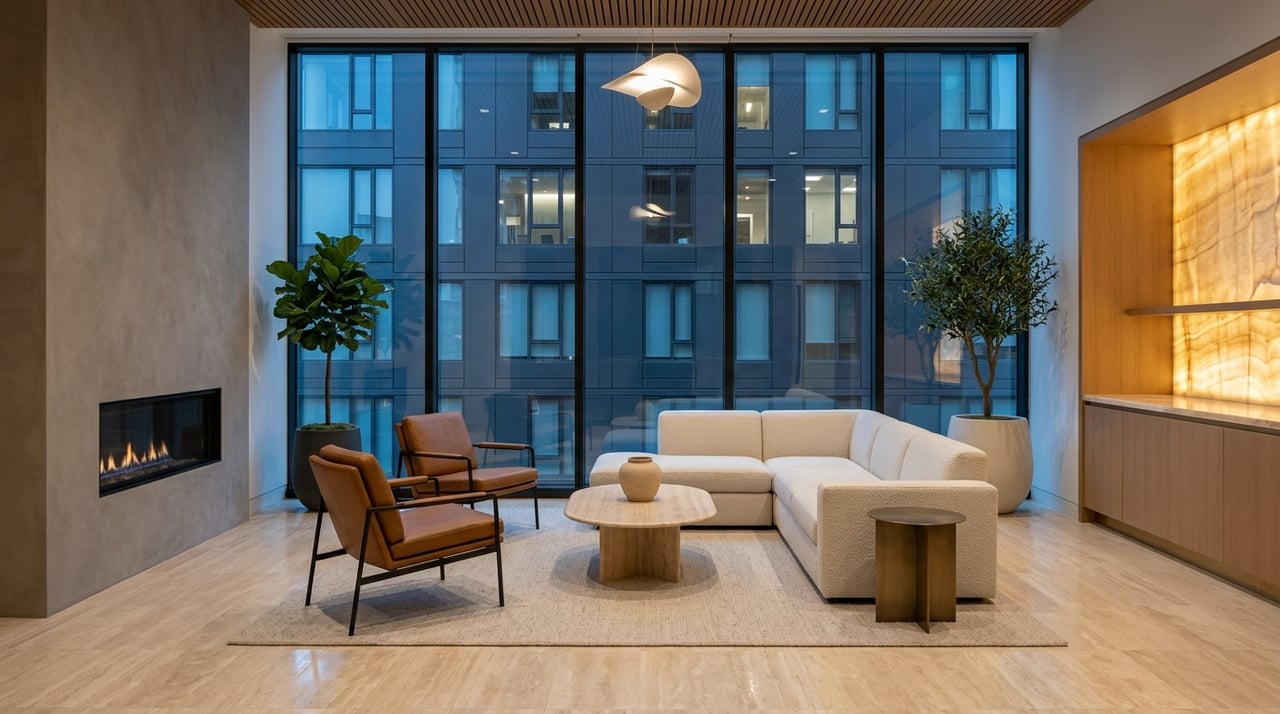
If you are looking at luxury condos in downtown San Diego, headline prices only tell part of the story. The real difference between an average condo and a true luxury residence often comes down to the building, the view, the floor, and the way the property lives day to day. If you want to understand where value sits in this market and what to watch before you buy or sell, this guide will walk you through it. Let’s dive in.
What defines luxury downtown
Downtown San Diego’s luxury condo market is a small, distinct segment of the broader 92101 attached market. In 2025, MLS-recorded luxury condo sales averaged $1,399,788, with a median sale price of $1,205,000 across 152 transactions.
That sits well above the broader 92101 attached market, where the median sales price was $795,000 in March 2026. The broader market also had 323 attached homes for sale and 7.4 months of inventory, which suggests general downtown condos may behave differently from top-tier luxury product.
For you as a buyer or seller, that means one important thing: you cannot value a luxury condo by looking at downtown condo averages alone. The premium segment is more sensitive to tower reputation, service level, floor height, and view orientation.
Why price per square foot varies so much
One of the clearest signs of a specialized luxury market is the wide spread in price per square foot. In the 2025 downtown luxury report, sales ranged from $519 to $2,009 per square foot.
That range tells you the market is not pricing homes on size alone. In many cases, buyers are paying for a specific stack, a protected view corridor, a higher floor, stronger finishes, or a more complete service package.
A penthouse at Pacific Gate reached $2,009 per square foot, while the highest dollar sale in the 2025 luxury report was a Harbor Club penthouse at $4.85 million. That contrast shows how different types of luxury can succeed, whether the draw is newer construction, a signature address, larger scale, or a standout penthouse position.
Key luxury buildings to know
Pacific Gate
Pacific Gate remains the downtown benchmark for newer luxury condo living. The tower offers two- and three-bedroom residences, city and waterfront views, an outdoor pool terrace with cabanas, private boat share, a luxury car fleet, chef concierge service, porter services, and a prime 700 First Avenue address.
In the 2025 sales report, Pacific Gate posted the highest average price per square foot downtown at $1,304. It also produced the market’s top individual sale on a price-per-square-foot basis.
If you are comparing buildings, Pacific Gate often appeals to buyers who want newer construction, a polished amenity package, and a strong luxury identity in the market. It tends to command a premium for exactly those reasons.
Savina
Savina in Little Italy is another newer tower that draws buyers looking for a modern amenity set. According to its HOA materials, the building includes a pool, spa, fitness center, outdoor yoga terrace, sauna, steam room, pet retreat, social lounge with outdoor terraces, business lounge, and barbecue areas.
Savina also ranked among the top downtown buildings by price per square foot in 2025. But beyond amenities, it is also a good reminder that luxury living often comes with more detailed day-to-day rules.
Its handbook outlines lounge reservations, insurance requirements for private events, package size and weight limits, smoking restrictions, and guest parking rules. For some buyers, that structure feels organized and secure. For others, it may feel more restrictive than expected.
The Grande North
The Grande North in the Columbia District is a full-service tower with a strong downtown reputation. Its official building information highlights 39 floors, 221 residences, 24/7 security, concierge package management, fob-restricted floors, camera coverage, gated subterranean parking, an 80-foot pool, whirlpool spa, sauna, steam room, guest suite, and complimentary internet.
It finished among the top five downtown buildings by average price per square foot in 2025. For buyers, it often represents a blend of strong service, established reputation, and a location that keeps it relevant in luxury conversations.
Harbor Club
Harbor Club shows that older luxury towers can still compete at the top of the market. Located in the Marina District, it emphasizes privacy, water and city views, and close proximity to the bay and Gaslamp area.
The HOA states the two towers have 100 and 101 residences, with no more than three homes per floor. The building also offers 24-hour staff, pool-deck seating, fire pits, BBQs, clubhouse space, a bay-view fitness center, sauna, and hot tub.
Harbor Club is especially important because it proves that luxury is not only about new construction. Rare floor plans, lower density, and strong views can still command major prices, especially at the penthouse level.
Electra
Electra is another useful comparison for buyers who want a classic high-rise profile with a different feel from newer towers. Public-facing building information highlights its conservatory, pool, hot tub, steam room, sauna, fifth-floor terrace, concierge and security presence, and strong bay and city views from many southwest-facing homes above the 15th floor.
When you compare Electra to buildings like Pacific Gate or Savina, you are often comparing different lifestyles and architectural eras, not just different floor plans. That is an important distinction when evaluating value.
What buyers are really paying for
In downtown San Diego, luxury buyers are usually shopping for three things at once: building reputation, monthly carrying cost, and the quality of the view or stack. Those factors often matter more than raw square footage.
A residence with the right orientation, a higher floor, and a clear water or skyline view may outperform a larger unit with weaker exposure. That is one reason price-per-square-foot spreads are so wide in this segment.
Service is another major value driver. Pacific Gate offers a boat share, car fleet, and chef concierge. The Grande North emphasizes package management, security, and guest suite access. Savina brings a newer social and wellness-focused amenity set, while Harbor Club leans into privacy, staffing, and lower-density living.
For you, that means a smart purchase is not just about finishes inside the home. It is about choosing the lifestyle model that actually matches how you live.
Why HOA review matters in luxury towers
Luxury condo buying in California involves more than choosing a residence and negotiating a price. A condo is a legal ownership structure, and ownership can include your individual unit plus an undivided interest in common areas, along with possible exclusive-use spaces such as balconies or parking.
Before closing, California law requires delivery of governing documents, recent annual budget materials, current assessment information, notices of unresolved violations, any rental restrictions, and, if requested, recent board minutes and the latest inspection report. In a luxury building, these documents can reveal just as much as the finishes or the view.
You should pay close attention to the HOA’s financial health. California requires annual budget reporting and reserve planning, including an operating budget, reserve summary, reserve funding plan, insurance summary, and related disclosures.
The board must also conduct a reserve study at least every three years and review it annually. In practical terms, that helps you ask the right question: is the building properly funding future repairs, or could a lower monthly fee today lead to larger special assessments later?
Daily rules can shape the ownership experience
In many luxury towers, HOA rules affect daily life more than buyers expect. Savina’s handbook is a strong example, with policies covering lounge reservations, event insurance, package size and weight limits, smoking restrictions, and guest parking controls.
The Grande North also uses concierge package handling, fob-controlled floor access, and reservation-based guest parking. Pacific Gate uses reservation systems for certain amenities as well.
These policies are not necessarily drawbacks. In some buildings, they support security, organization, and resident experience. But if you entertain often, travel frequently, or want maximum flexibility, those operational details deserve close review before you move forward.
What the latest sales say about resale
The 2025 downtown luxury market was relatively steady on pricing, though transaction volume softened. Average sale price was only slightly lower year over year, while the median price slipped from $1.25 million to $1.205 million and transactions declined from 173 to 152.
That pattern suggests buyers were still willing to pay for quality, but the pool of transactions narrowed. In that kind of environment, strong positioning matters even more.
Pacific Gate led the market on average price per square foot, followed by Metropolitan, Bayside, Savina, and The Grande North. That ranking supports a simple takeaway: buildings with the strongest mix of views, newer construction, and hotel-style services tend to lead the premium segment.
At the same time, Harbor Club’s $4.85 million penthouse sale shows that legacy towers remain competitive when they offer uncommon size, penthouse placement, or exceptional views. For sellers, that means your building’s age alone does not determine your pricing power.
How to approach this market wisely
If you are buying in downtown San Diego’s luxury condo market, focus on the factors that truly drive long-term value:
- View orientation and floor height
- Building reputation and service level
- HOA financial strength
- Daily-use rules and restrictions
- Monthly carrying costs relative to the lifestyle offered
- Scarcity of the floor plan, stack, or penthouse position
If you are selling, resist the urge to price from broad downtown condo comps. Luxury buyers tend to pay for a specific combination of view, building identity, and living experience.
That means the best strategy usually starts with precise positioning, not broad averages. In a segment where pricing can vary from $519 to $2,009 per square foot, nuance matters.
Downtown luxury is not one market. It is a collection of micro-markets inside individual towers, floor plans, and view lines. Understanding that distinction can help you buy with more confidence or sell with a more disciplined strategy.
If you want a private, high-level read on how a specific downtown condo or building fits into today’s market, connect with Craig Lotzof for a confidential consultation.
FAQs
What is considered a luxury condo in downtown San Diego?
- In this market, luxury condos are generally the higher-priced residences within downtown’s attached market, often distinguished by premium towers, stronger views, higher floors, fuller service packages, and limited inventory.
How much do luxury condos cost in downtown San Diego?
- In 2025, MLS-recorded downtown luxury condo sales averaged $1,399,788, with a median of $1,205,000.
Why does price per square foot vary so much in downtown San Diego luxury condos?
- Price per square foot can vary widely because buyers often pay premiums for view orientation, floor height, building quality, amenities, and rarity, not just for interior size.
Which downtown San Diego luxury condo buildings stand out most?
- Pacific Gate, Savina, The Grande North, Harbor Club, and Electra are all important buildings to know when comparing downtown luxury options.
What should buyers review in a downtown San Diego condo HOA?
- Buyers should review governing documents, budget materials, assessment information, reserve planning, rental restrictions, unresolved violations, and any rules that could affect daily use of the property.
Are older downtown San Diego towers still competitive in the luxury market?
- Yes. Buildings like Harbor Club show that older towers can still command premium pricing when they offer rare floor plans, penthouse positions, strong views, privacy, and service.
Is the downtown San Diego condo market negotiable right now?
- The broader 92101 attached market had 7.4 months of inventory in March 2026, which suggests the general condo market may be more negotiable than the top headline luxury towers.